A penthouse in the Acropolis area – An eclectic approach
Από: Επίκυκλος
It is a project full of peculiarities and challenges which concerns the reconfiguration and interior design of a spacious penthouse in a 60’s apartment building in the Acropolis area. The owners had a clear vision as to the choice of the aesthetic direction and from the very beginning there was a clear desire to create spaces filled with various aesthetic references, colours, materials and textures. It was deliberate to mix elements from different cultures and periods to create a unique space inspired by the owners’ experiences and memories.
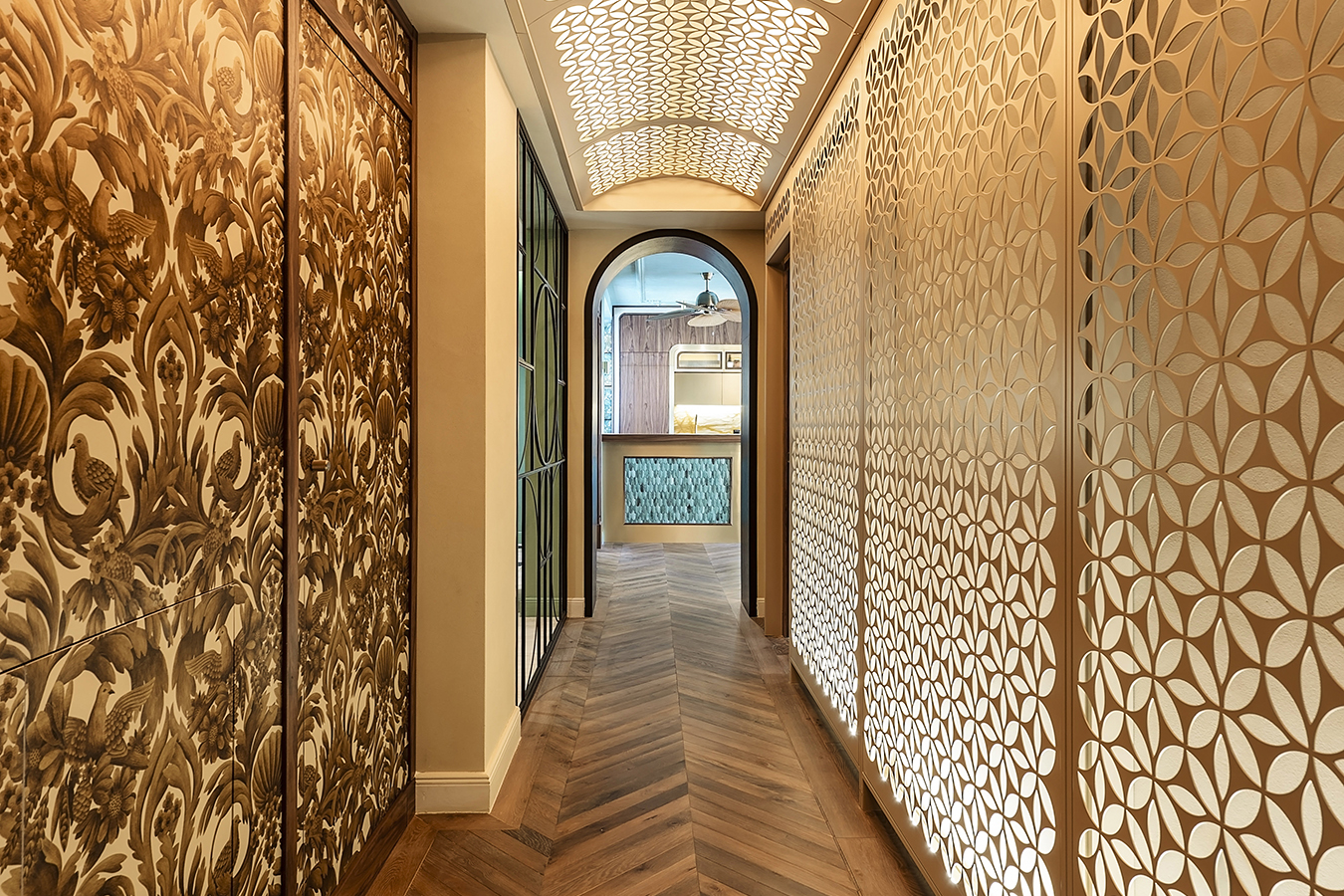
The entrance is defined by an impressive corridor with its main feature of perforated sheet metal panels with concealed lighting covering one side and continuing to the ceiling creating an arched passage. The dark oak flooring in a herringbone “chevron” arrangement defines the direction to the day-use areas. A metal partition with geometric shapes on a larger scale leaves visual communication towards the living area but blocks the passage by directing the user to the area in front of the kitchen island which is characterized by the handmade wing-shaped mosaic paneling.
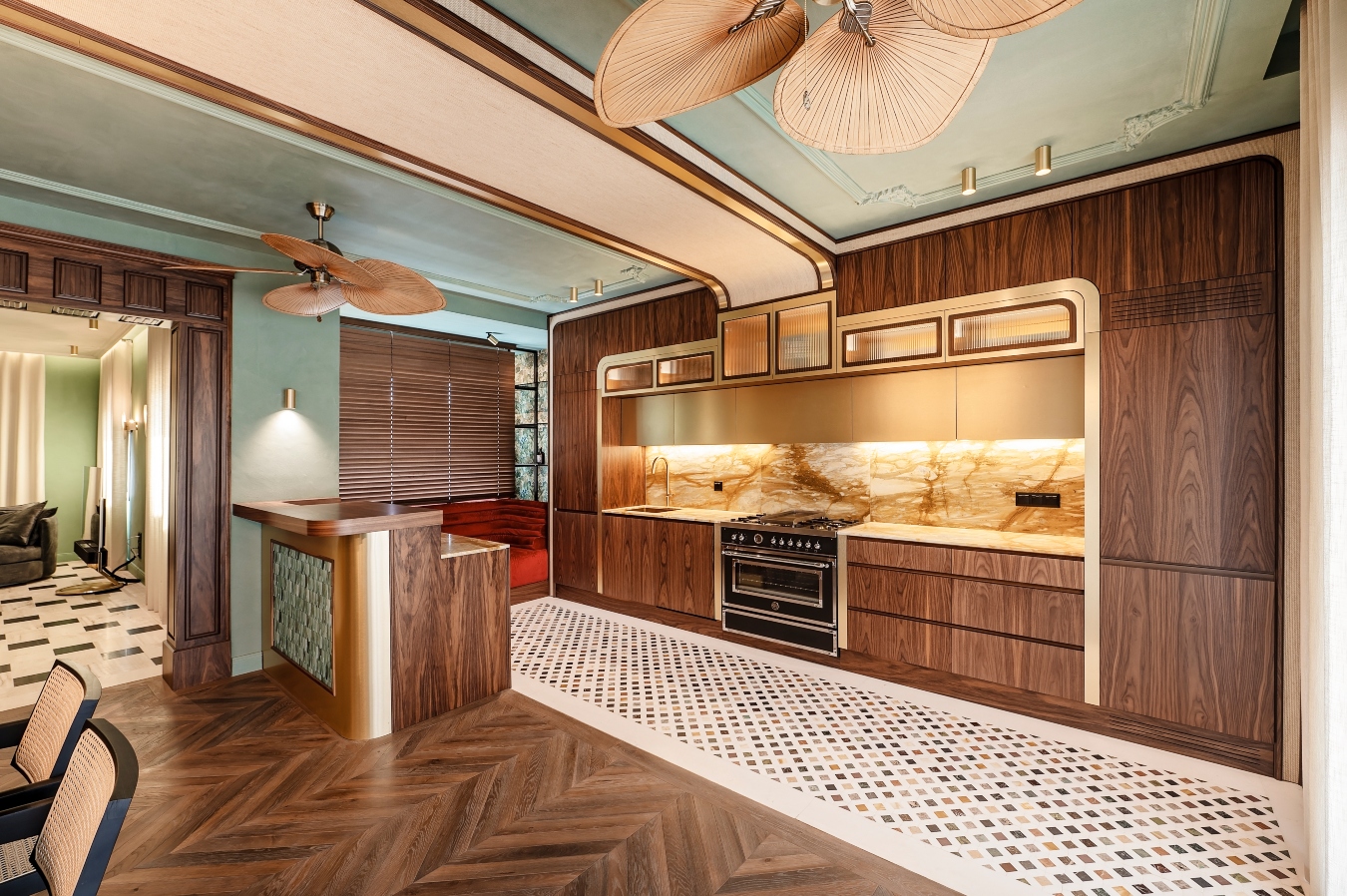
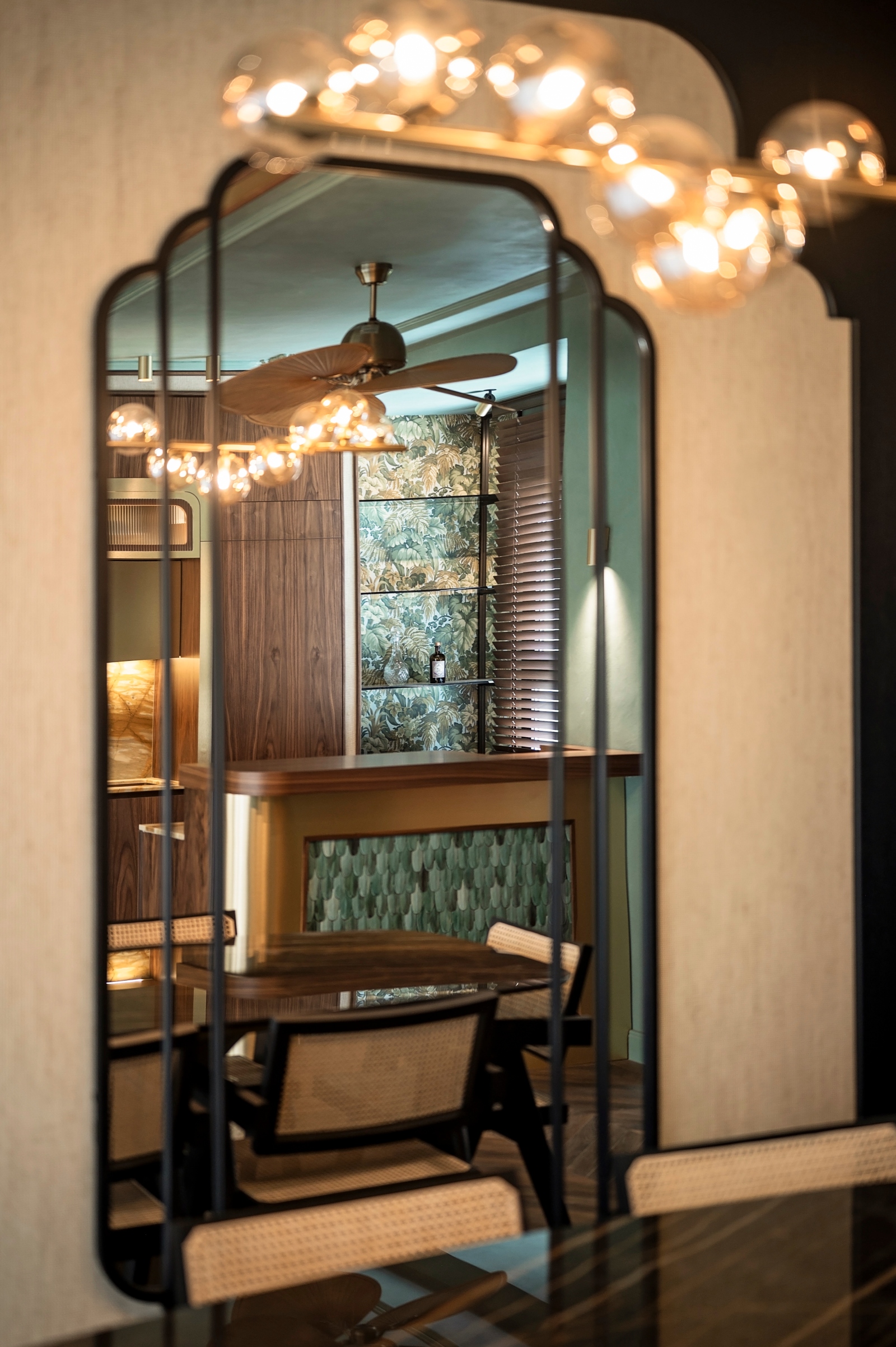
The kitchen area, due to its prominent position, is a reference point and deliberately includes elements that refer to a formal dining area of an exotic destination. American walnut timber combined with brass textured surfaces, rattan wallpapers, embossed striped crystals, and Italian Giallo Siena marble make up the materiality of the kitchen which is underscored by the handmade multi-coloured marble mosaic covering the floor in this area. At the end of the mosaic there is an auxiliary seating area in front of a glazed window overlooking the Acropolis rock, with the choice of red velvet in the upholstery referencing elements of neighbouring buildings.
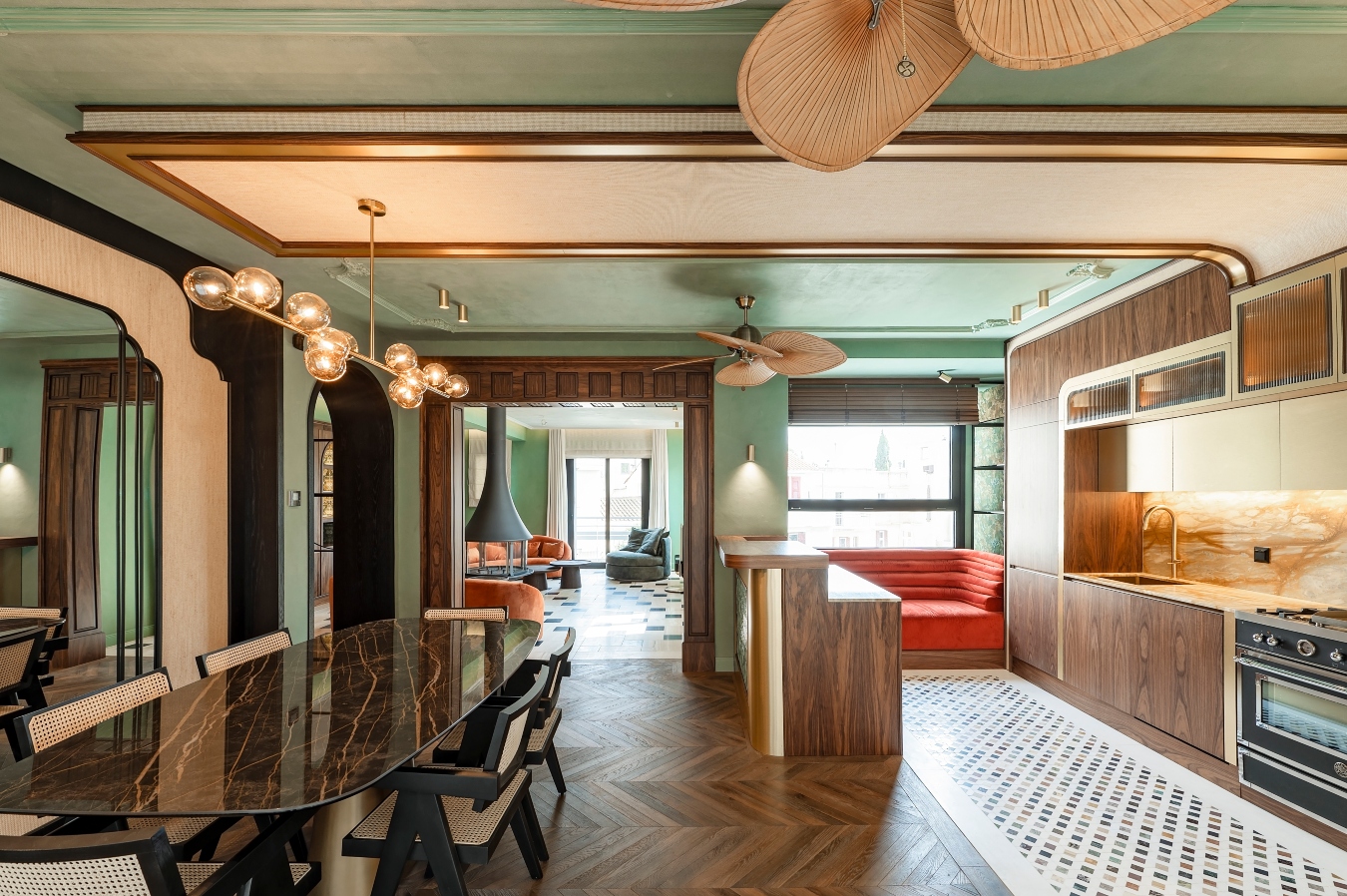
The visual connection between kitchen and dining room is reinforced by the continuation of the kitchen materials on the ceiling through an island that also acts as an axis of symmetry in terms of the elevation. The plaster ceiling decoration and the aesthetic fans support the thematic character of these two spaces.
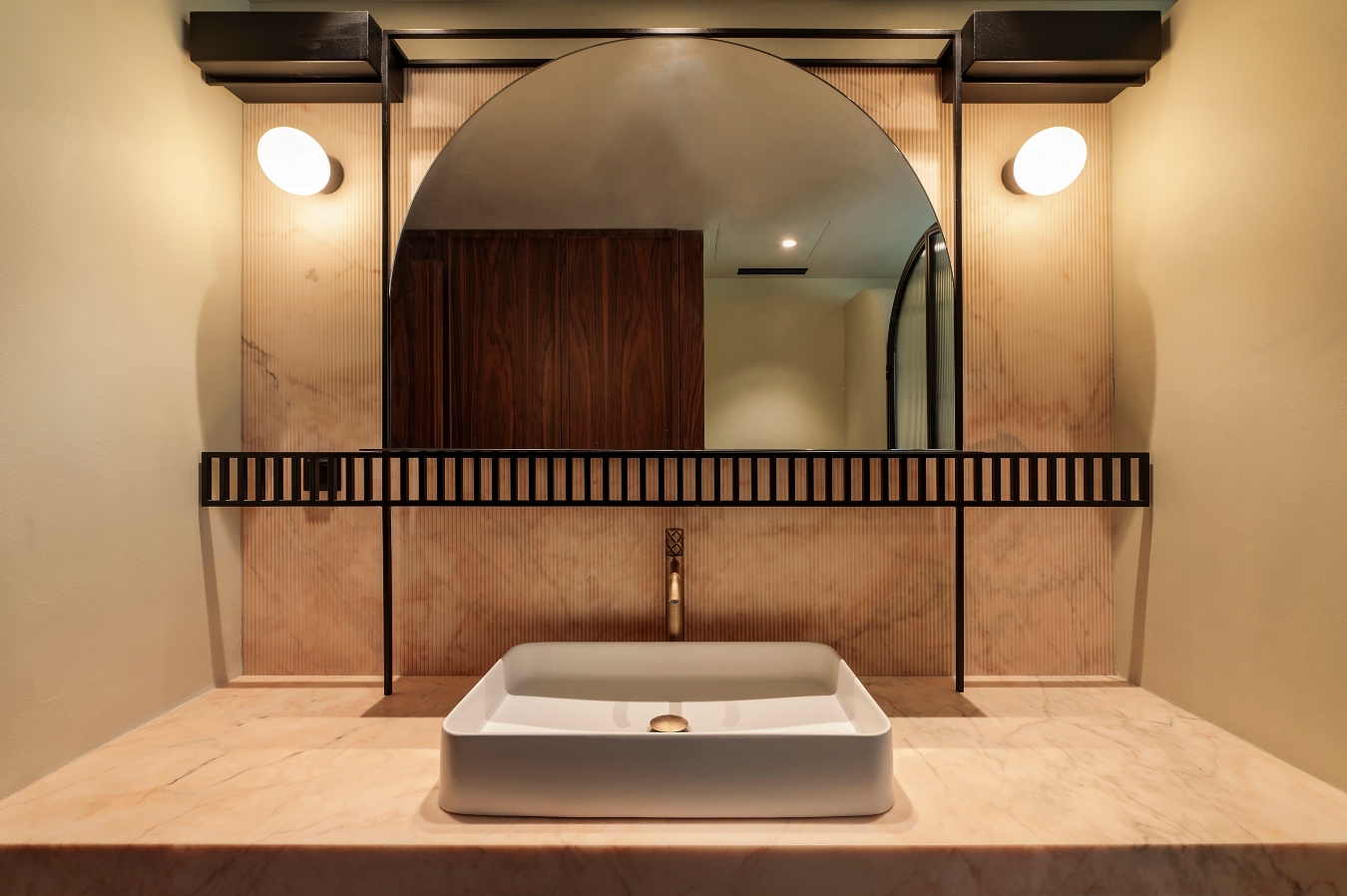
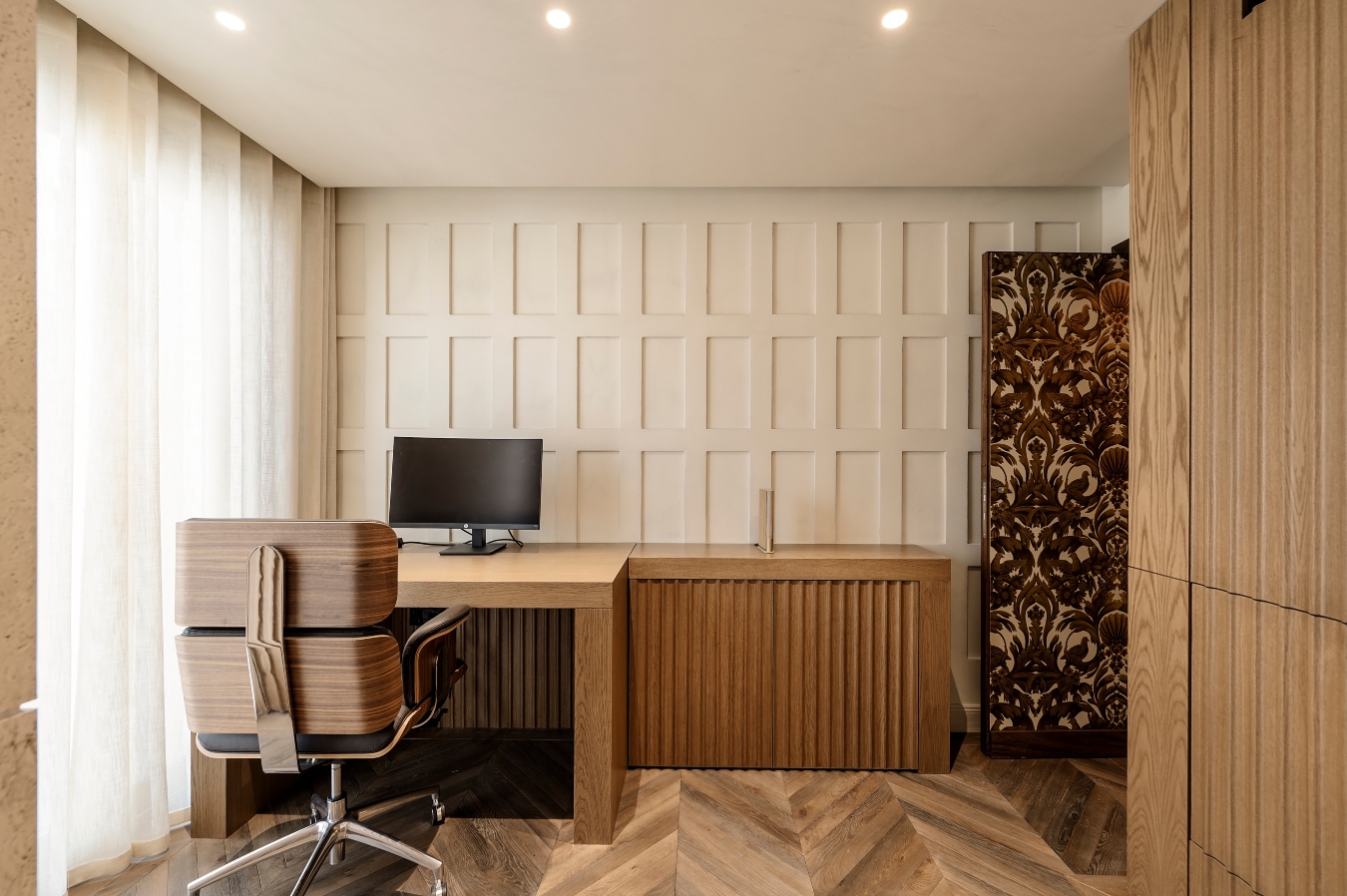
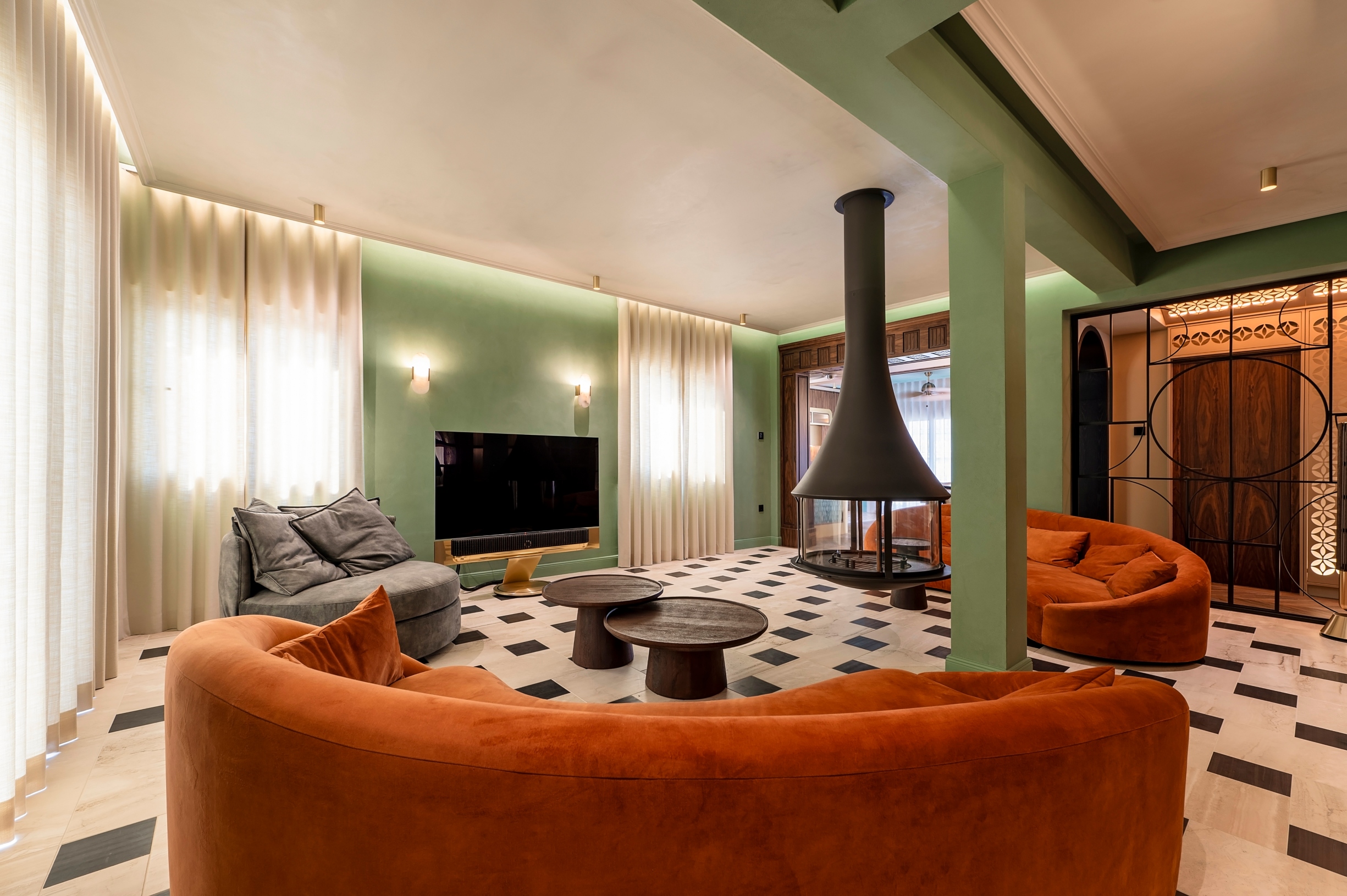
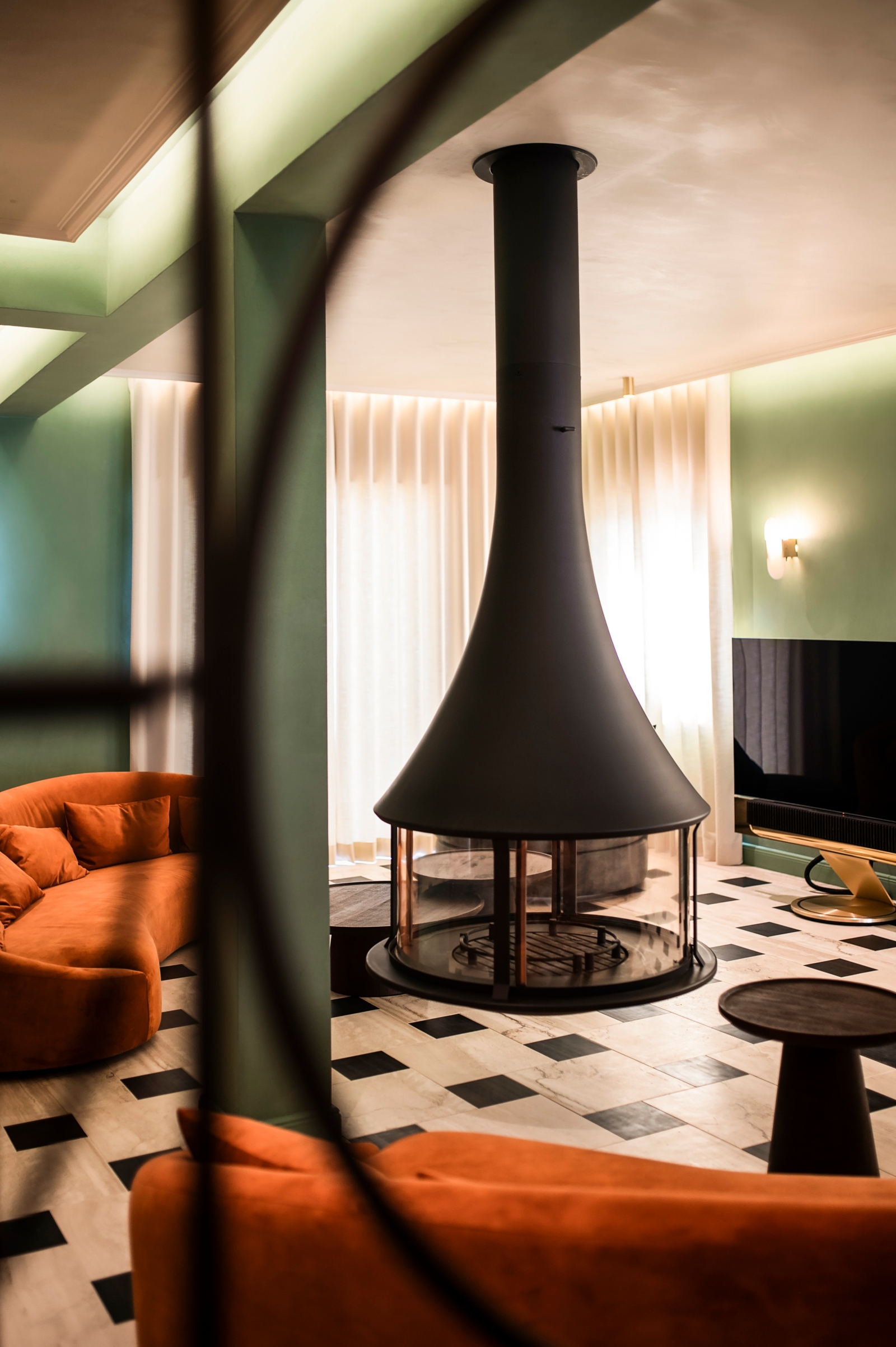
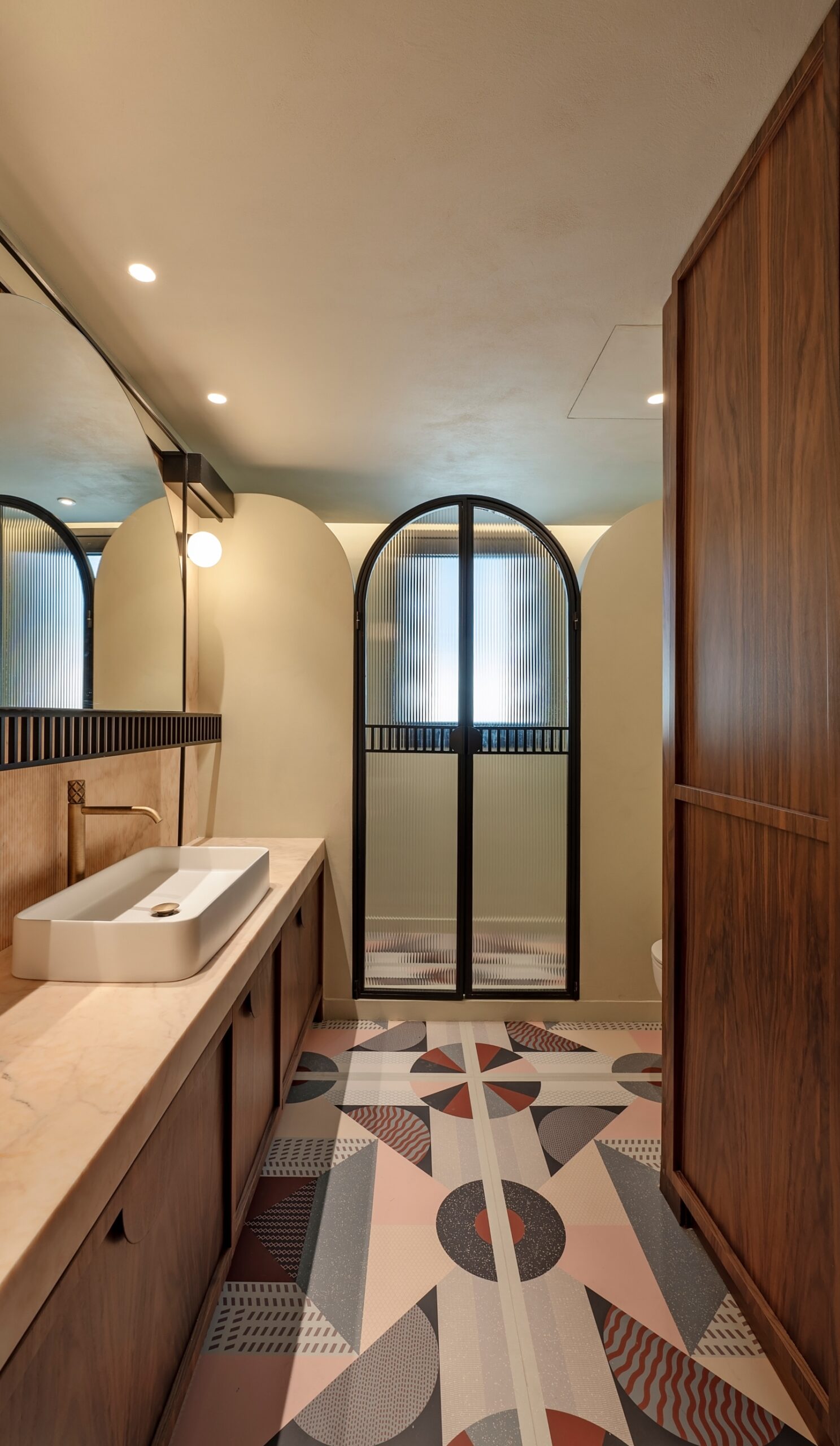
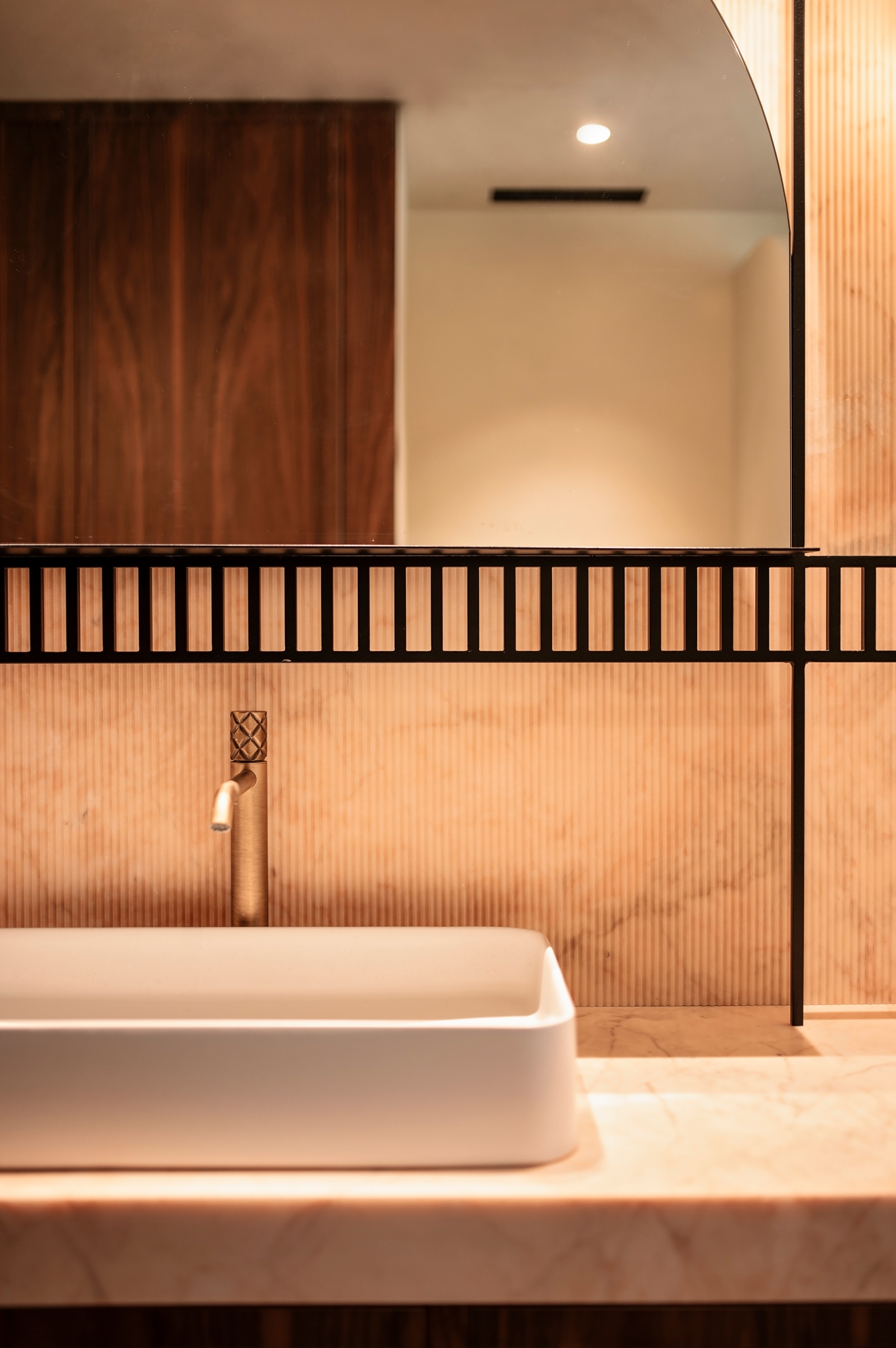
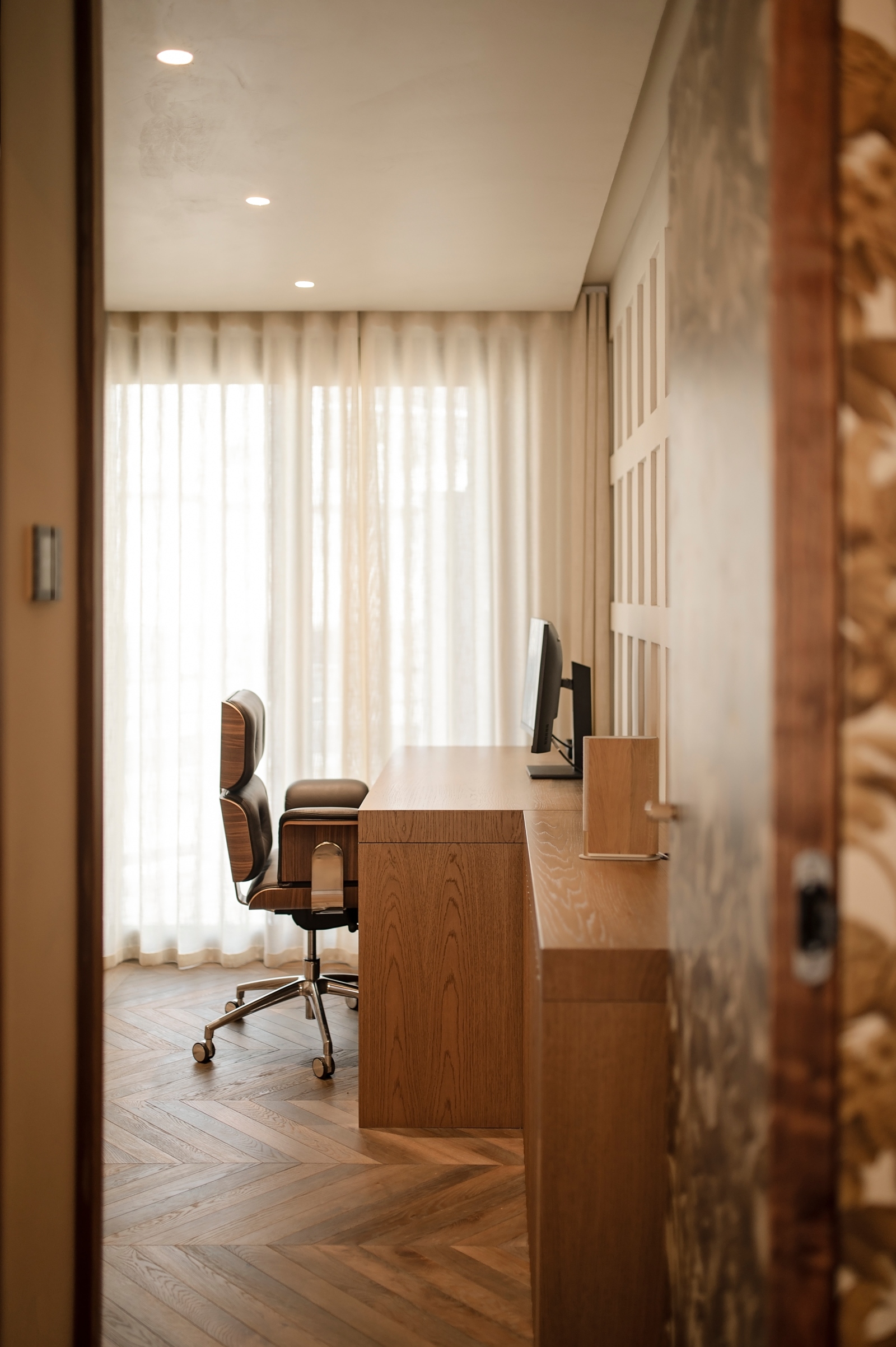
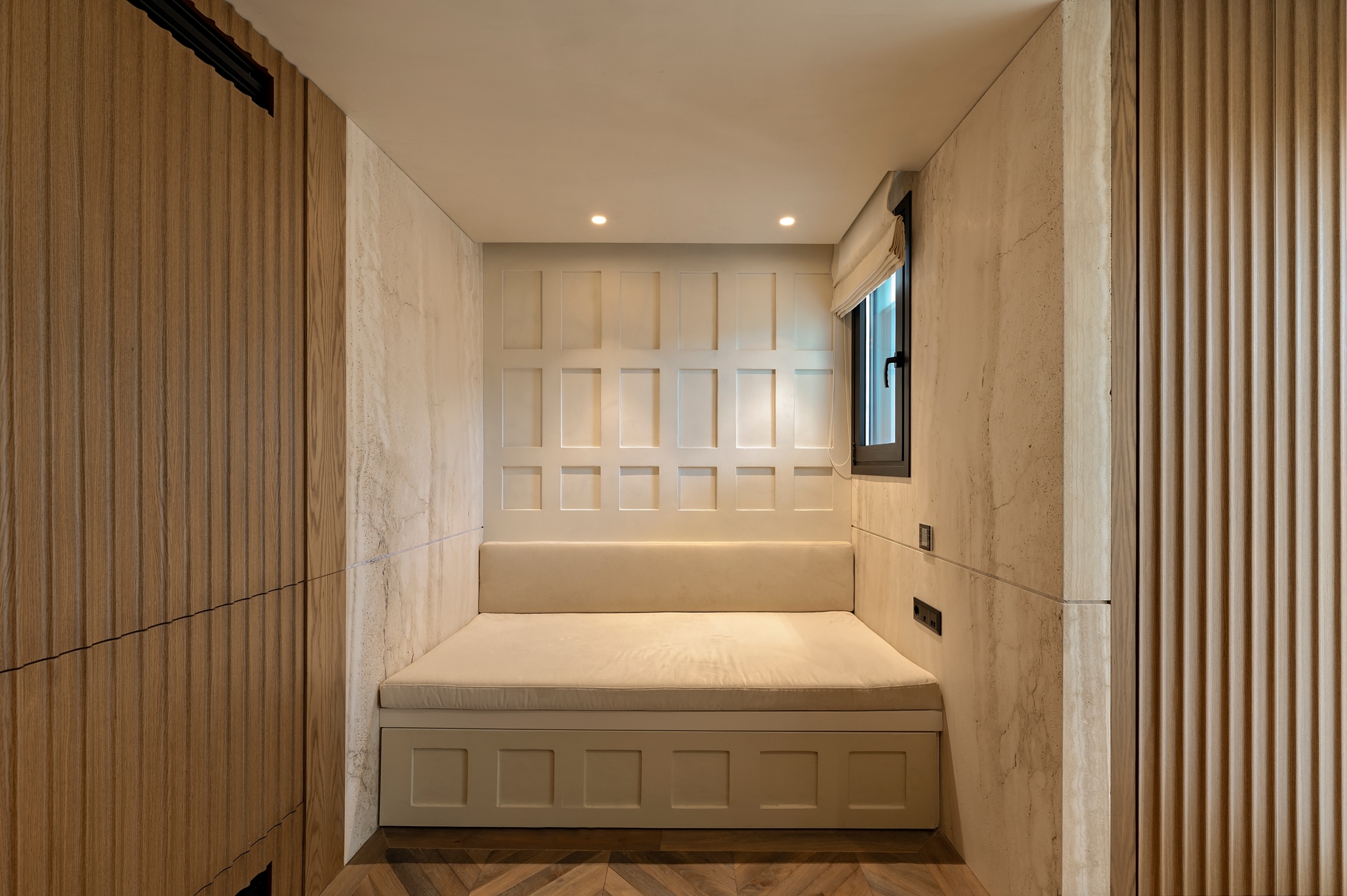
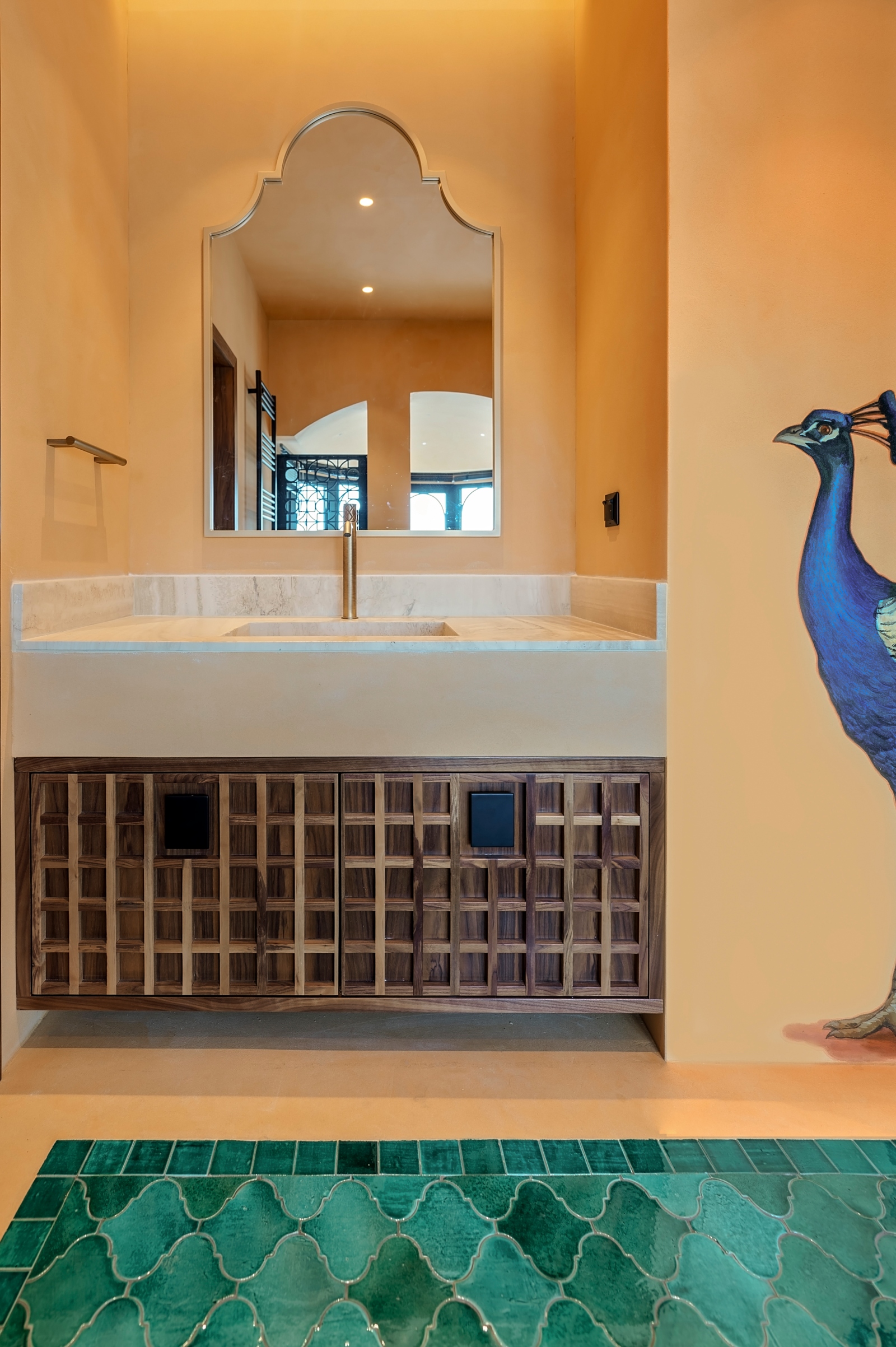
The living room is designed around a central free-standing round-shaped fireplace suspended from the ceiling, with the sofas and other movable furniture following this curvature. The separation with the adjacent spaces is boldly achieved through the materiality of the floor which is covered with travertine slabs and smaller slabs of black marble that alternate to form a classic, strictly rectangular pattern, which also creates an interesting and strong contrast with the curved forms of the furniture. The space is complemented by an imposing, specially designed walnut structure, with classical and contemporary elements, which serves as a library, record room, wine cellar, office and storage space, and encloses parts of the mechanical equipment.The presence of curved forms is strong in the communal bathroom. From the particular pattern in the floor tiles to the geometry of the special metal structures, shapes and forms coexist and are repeated in different versions of materiality and scale. The countertop where the washbasin is located is dressed with “Rossa Portogallo” marble which continues on the wall as a striped relief surface. The shower area is defined by a double arched door made up of a metal frame and a striped embossed glass, supported on the sides by two symmetrical walls with curved ends. The bathroom cabinets in walnut wood maintain the linearity from the patterns of the other materials while providing the necessary storage space.The office, which can also function as a guest room, is accessed from the main corridor through a “hidden” door that is externally integrated into a wallpaper panel. The impressive view of the Parthenon from this room has inspired the design, which is characterised by strict geometry and neutral colour tones, while the main compositional elements are the travertine wall cladding, oak timber both on flat surfaces and on specially made grooved surfaces, as well as the wall panels with a granite veneer coating. The furniture consists of a specially constructed desk with a hidden lifting mechanism and a built-in sofa that can be converted into a double bed.
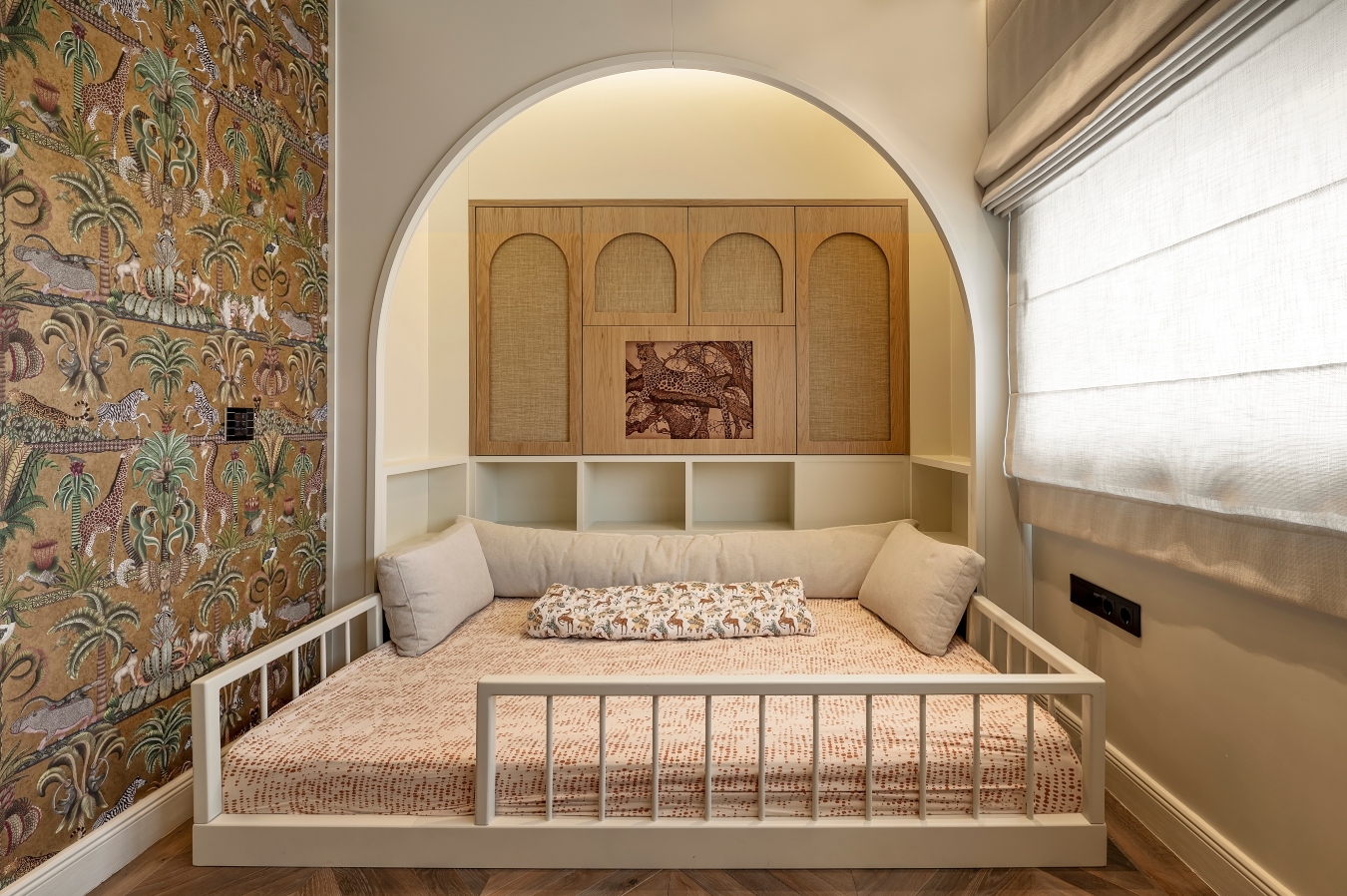
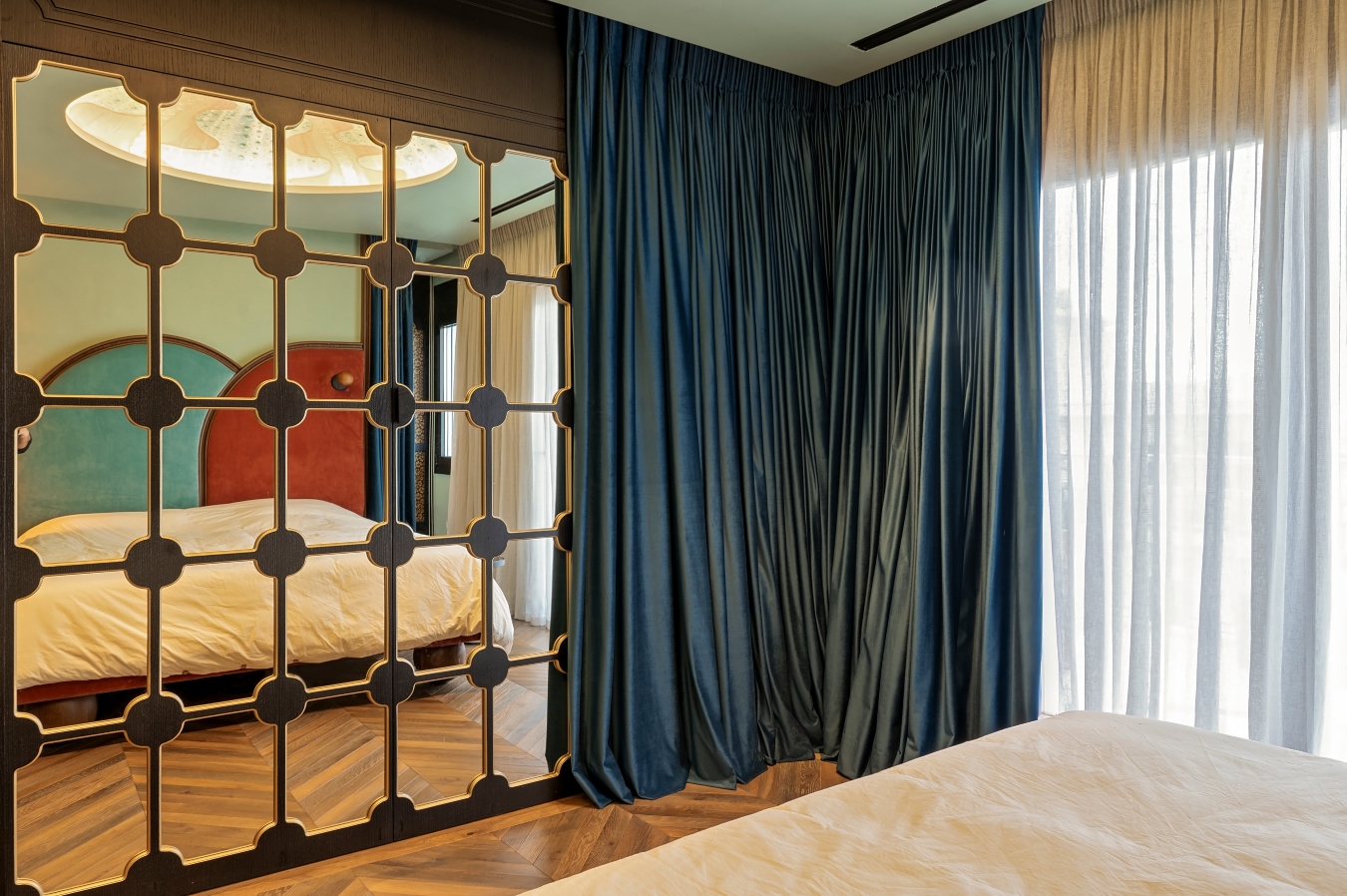
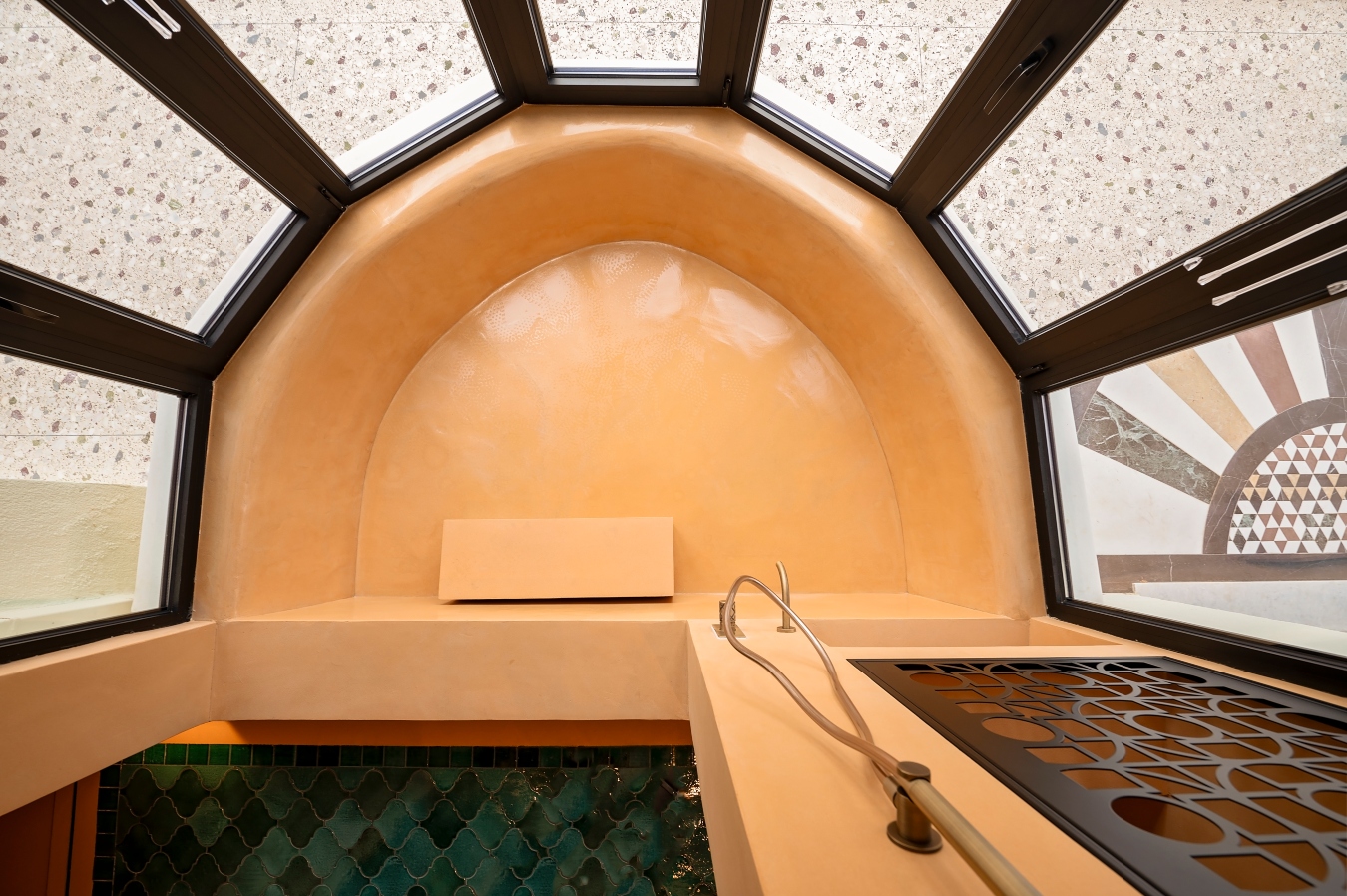
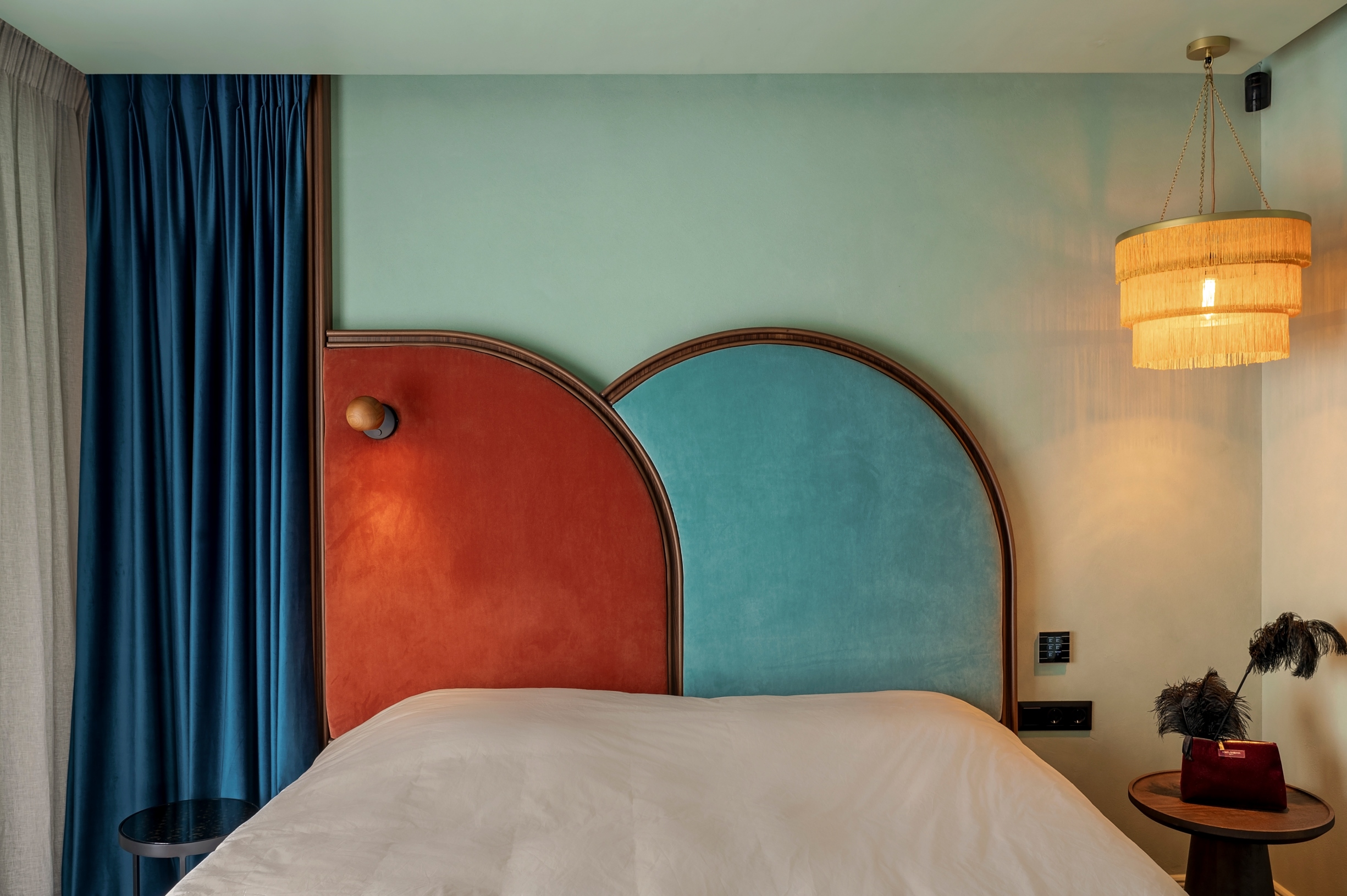
In the children’s room, a calmer composition of neutral, warm tones, light oak wood combined with rattan surfaces in the construction of the marbles, and a unique wallpaper that connects it to the overall aesthetics of the house. Characteristic is the archway that creates an inviting alcove for the bed.The bold colour palette of the master bedroom is defined by the canopy that dominates the ceiling, which is hand-painted and is the main feature of this space. The custom-designed headboard enhances the element of curve in the space and is highlighted by the bed’s spherical oak legs. One side of the room is covered by a black oak frame structure with a mirrored interior, including a hidden door leading to the private bathroom. The striking curtain in bright blue has the potential to transform the room in a theatrical way. In accordance with the owners’ wishes, the design of the bathroom follows a hamam aesthetic derived from elements such as terracotta-coloured finishes, handmade Moroccan “zellige” tiles, geometric patterns on perforated partitions and a handmade mural depicting a peacock. The different levels define the separate functionalities, while leading to the impressive built-in bathtub that communicates directly with the outdoor terrace through a semi-circular glazed door.